

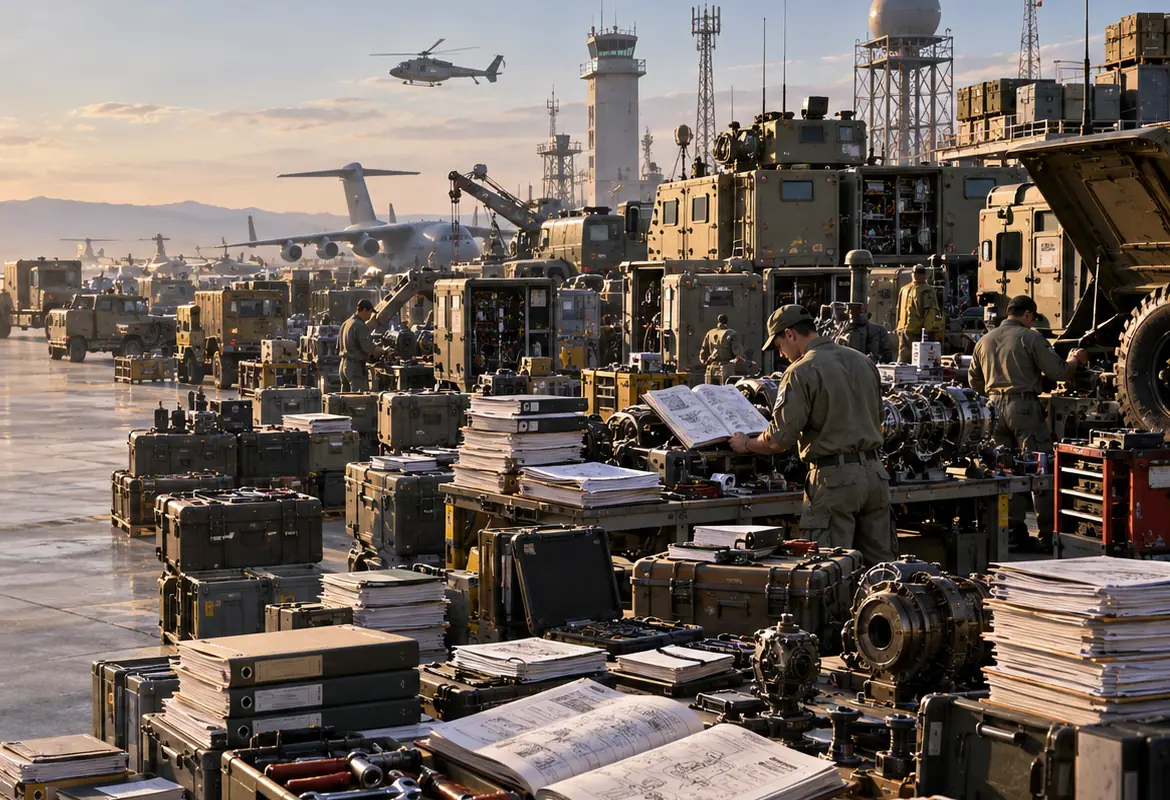
ChaukasMission-Critical Asset Intelligence
Intelligence for the assets missions depend on.
Connect asset identity, authorised technical knowledge, inspection evidence, maintenance history and AI-assisted investigation — within the operational boundaries your mission requires.
Chaukas is a Mission-Critical Asset Intelligence platform designed for environments where connectivity, data access and operational authority cannot be assumed. It connects the physical asset with authorised knowledge, evidence, history and grounded intelligence — from the field to the command environment.
WeSimplifAI · Mission-Critical Asset Intelligence
Mission-Critical Asset Intelligence
- IdentityAuthoritative asset context
- KnowledgeApproved technical information
- EvidenceInspection and operational evidence
- HistoryPersistent asset memory
- InvestigationEvidence-grounded reasoning
- ControlHuman authority and auditability
Designed for controlled environments
- Air-gappedOperate without assuming public connectivity
- Evidence-groundedReason from authorised information and evidence
- AuditablePreserve provenance and decision context
- Human-authorisedAI recommends; qualified humans remain accountable
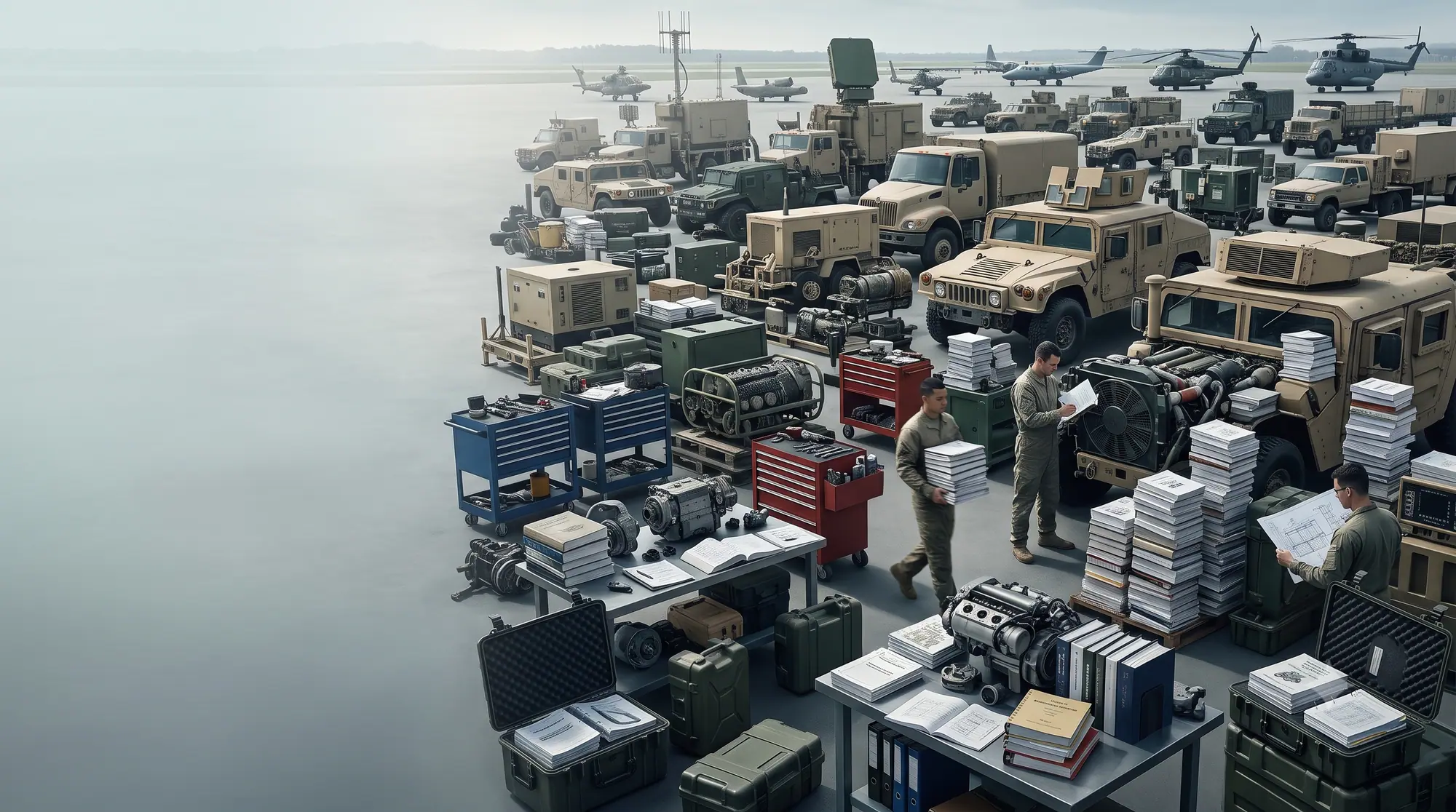
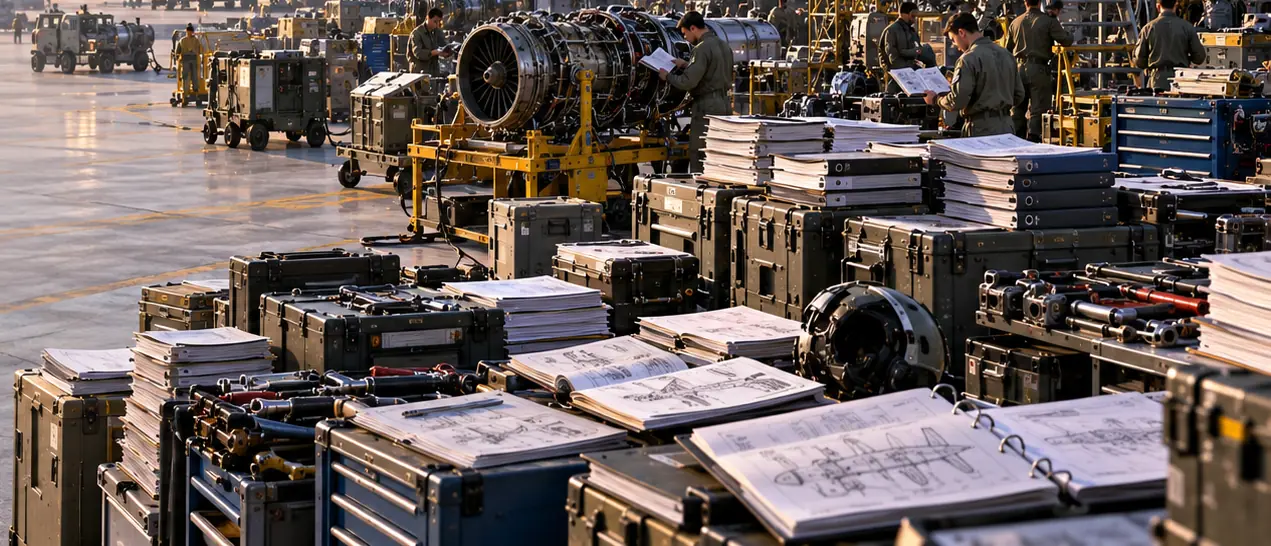
The asset is physical. Its knowledge is fragmented.
Everything needed to understand a mission-critical asset already exists — just not in one place, and rarely in a form anyone can trust at speed.
- OEM manuals
- Technical orders
- SOPs
- Maintenance records
- Inspection reports
- Defect reports
- Parts information
- Technician knowledge
- Images
- Telemetry
- Historical evidence
ResultThe operator has to reconstruct context — by hand, under time pressure.
Mission readiness is increasingly a knowledge problem.
Complex configurations
More components, modifications and technical dependencies than any one person tracks from memory.
Fragmented evidence
Knowledge distributed across manuals, inspections, records and the people who happen to remember.
Disconnected operations
The people who need an answer may be exactly where connectivity cannot be assumed.
From the physical asset to an authoritative record.
One simple story: an asset acquires context, the context supports intelligence, the intelligence is grounded in evidence — and a qualified human decides.
- 01Physical AssetThe equipment itself, in its operational environment.
- 02Asset IdentityExactly which asset, in exactly which configuration.
- 03Authorised KnowledgeApproved technical information, tied to this asset.
- 04EvidenceObservations, images and records, with provenance.
- 05HistoryPersistent asset memory that outlives any rotation.
- 06InvestigationReasoning over this asset's own context and history.
- 07Evidence-Grounded RecommendationNext actions that cite what supports them.
- 08Qualified HumanAuthorised personnel decide. Always.
- 09Authoritative RecordConfirmed outcomes become part of the asset's history.
“AI can accelerate understanding. It does not replace operational authority.”
Explore the platformFrom records to operational context.
Chaukas does not replace the systems that record the asset. It gives those systems an intelligence layer around the asset.
Systems of record — they record the asset
- ERP
- EAM
- CMMS
- IoT
- Document repositories
- Inspection systems
- Identity
- Knowledge
- Evidence
- History
- Investigation
- Context
- Recommendation
- Human authority
Qualified people — they decide
- Field technician
- Maintenance lead
- Investigator
- Command
Systems of record record the asset. Chaukas understands the asset.
Complementary by design. ERP, EAM, CMMS, IoT platforms, document repositories and inspection systems each do a job that matters — they execute workflows. Chaukas connects the context around the asset — identity, knowledge, evidence, history — so the people using those systems can understand what they are looking at and supplies context for the decision, not another workflow to run.
An asset that carries its own intelligence.
Identity, configuration, knowledge, evidence, history and open questions — gathered around one physical asset and kept there.
Inside one asset.
Six intelligence dimensions, one asset. Select a dimension to see what accumulates around it — conceptual data, not a live system.
Identity
- Asset ID
- CHK-A-0421
- Class
- Fixed-wing platform
- Configuration
- Baseline C
- Components
- Linked · 3 systems
Conceptual representation of the Chaukas asset intelligence model. Not customer data.
An asset becomes more intelligent as its context accumulates.
Seven stages, from knowing what the asset is to recording what was decided.
Know exactly what asset you are looking at.
Every asset carries a persistent digital identity — model, serial, configuration and the components that make it up — bound to the physical equipment so anyone in the field can establish what they are looking at.
Asset identityAsset IDCHK-A-0421ClassFixed-wing platformConfigurationBaseline CRetrieve authorised, asset-specific technical knowledge.
Approved manuals, procedures and specifications are attached to the asset and its configuration — retrieved with their source and revision, and only where the person's authorisation allows.
Technical knowledgeProcedureAccess panel inspectionRevisionRev C · currentScopeThis configurationConnect observations, documents, images and records.
Field observations, photographs, measurements and records are captured against the asset with time, source and reference — kept distinct from conclusions drawn later.
Inspection evidenceReferenceEV-0193 · imageCaptured06:42 · fieldStateObservationReason over the asset's context and history.
When something looks wrong, the investigation assembles the observation, the asset's history, its technical knowledge and prior findings into one context — and flags what is still unknown.
InvestigationSourcesHistory · knowledge · recordsPrior findingsRelated, this assetGapsFlaggedProvide evidence-grounded next actions.
Recommendations cite the knowledge and evidence that support them and are labelled by how well grounded they are — so a reviewer can see what is established and what is inferred.
RecommendationSuggestedInspect fastener seatingBasisProcedure + observationGroundingInferred · verifyQualified personnel remain responsible for operational decisions.
Chaukas supports the decision; it does not make it. Authorised personnel review, accept, amend or reject — and the decision, with its rationale, is attributed to them.
Human authorityDecision byAuthorised inspectorOutcomeAccepted · scheduledAttributedYesConfirmed outcomes become part of the asset's history.
The confirmed outcome joins the asset's permanent history with its evidence chain intact — so the next investigation starts with more context than the last.
Authoritative recordHistoryUpdatedEvidence chainPreservedAudit trailComplete
Mission readiness.
The same evidence-grounded context, rolled up: what fraction of the fleet is ready, and what stands between the remainder and ready.
Select any asset to see the evidence behind its status. Decision support — not mission clearance.
Intelligence where connectivity cannot be assumed.
Designed for controlled environments where public-cloud dependency is not acceptable at the point of use — from a disconnected site, through local knowledge and local inference, to controlled synchronisation.
AI intelligence without surrendering operational control.
Data, knowledge and inference stay inside the organisation's boundary.
Only authorised, asset-scoped knowledge is admitted.
Policy decides what reaches the model — and what does not.
Recommendations cite evidence and carry a grounding label.
Only a qualified human's decision becomes the record.
AI should know its boundaries.
Every stage can carry a policy boundary — especially where information may be controlled, connectivity is limited and operational consequences are real. And every statement is labelled by what stands behind it.
- 01Authorised knowledgeboundary
- 02Asset contextboundary
- 03AI reasoningboundary
- 04Grounded inferenceboundary
- 05Recommendationboundary
- 06Qualified humanboundary
- 07Authoritative record
The access-panel inspection procedure for this configuration is Rev C.
Source · authorised procedure librarySurface wear recorded at the panel edge at 06:42.
Source · field image EV-0193The wear pattern resembles a finding previously recorded on this asset.
Basis · history + observationInspect fastener seating before the next operational-use review.
Basis · procedure + inferenceInspection scheduled and accepted by the authorised inspector.
Attributed · decision recordedEvidence before inference.
Context before recommendation.
Human authority before action.
High-value operational scenarios, not a feature list.
Six places where an intelligence layer around the asset changes how quickly and how confidently people can act.
Asset Identification
Point to the asset. Establish its identity.
Inspection Intelligence
Turn observations and evidence into structured asset context.
Maintenance Investigation
Understand what happened, what has changed, and what evidence supports the next step.
Technical Knowledge
Retrieve the right authorised information for the asset in context.
Readiness Intelligence
Understand the condition and maintenance picture across a fleet.
Evidence & Audit
Preserve the evidence behind operational decisions.
Capability should not be concentrated among a few expert users.
Chaukas is an operational platform, not simply an AI interface — each role sees the asset through the question they actually ask.
Technician
“What do I need to know about this asset?”
Identity, configuration, the right procedure and its history — at the asset, in the field.
Maintenance Lead
“What is driving maintenance risk?”
Open investigations, recurring findings and information gaps, across the assets they answer for.
Investigator
“What evidence explains this anomaly?”
Observation, history, knowledge and prior findings assembled in one traceable context.
Command / Operations
“What is the readiness picture?”
A fleet-level view of asset condition and open issues — as input to their decision.
Administrator
“Who accessed what, and what changed?”
Access scope, classification and a complete audit trail of what was viewed, recorded and changed.
Built for environments where operational control matters.
Readiness, configuration, technical knowledge and operational authority cannot be separated. Chaukas is designed first for Army, Navy and Air Force — the equipment, the connectivity and the authority structures of defence.
Disconnected operation
Designed to operate at the point of use without assuming public connectivity.
Controlled knowledge
Authorised technical knowledge, with source, revision and access scope preserved.
Asset-specific intelligence
Reasoning scoped to one identified asset and its own context.
Evidence provenance
Every observation and claim traceable to where it came from.
Local inference
Designed so AI reasoning can run inside the organisation's own boundary.
Human authority
AI recommends; qualified personnel decide and are recorded as deciding.
Controlled deployment
Configured to the organisation's boundary, roles and classification policy.
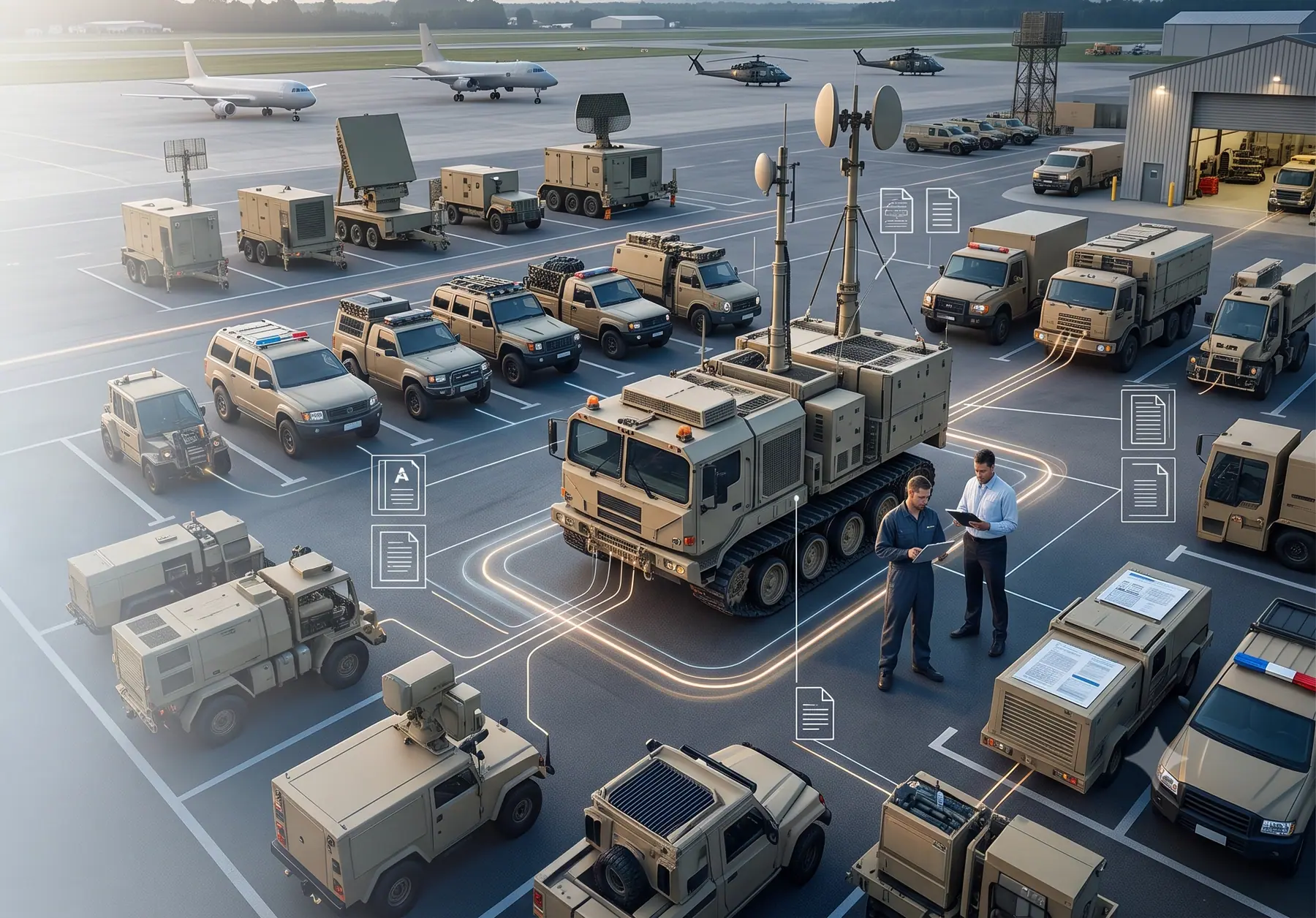
Land systems whose readiness is spread across many vehicles, units and OEMs.
- Armoured and support vehicles
- Radar and communications
- Power generation
- Workshop equipment

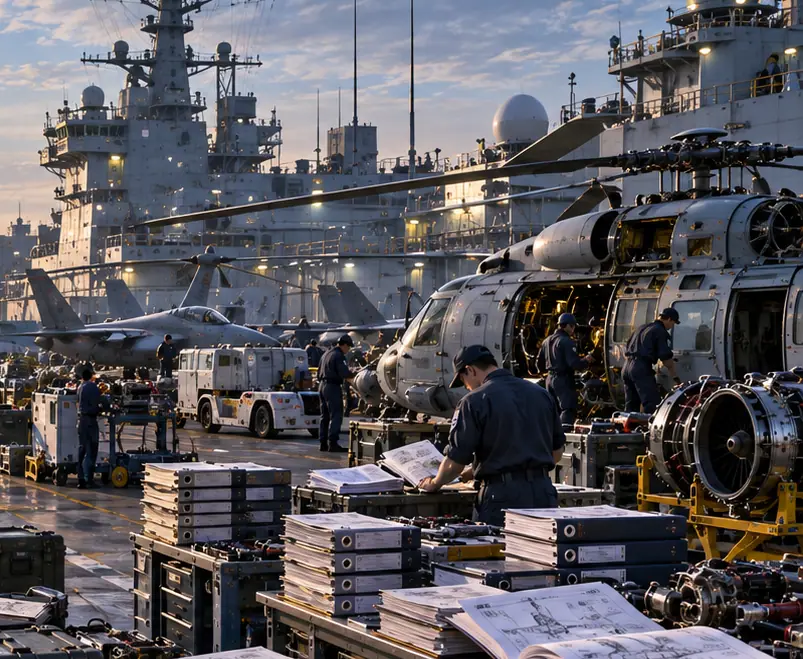
Platforms and shipboard systems where configuration and inspection history must survive every refit and rotation.
- Vessels and shipboard systems
- Dockyard and pier equipment
- Embarked aviation
- Power and propulsion

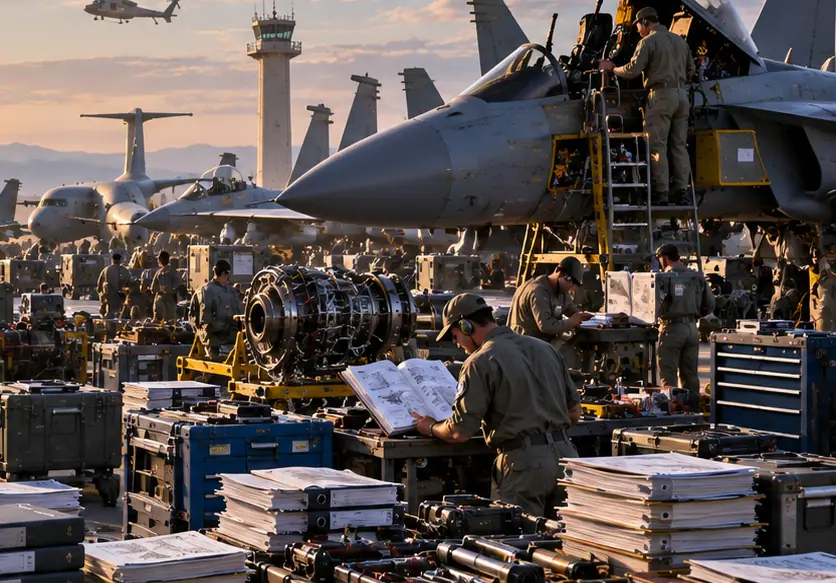
Aircraft, engines and ground support — each with a configuration, a history and a documented procedure.
- Aircraft and helicopters
- Engines and avionics
- Ground support equipment
- Airfield systems
Mission-critical is bigger than defence.
Where asset failure carries operational consequences — a border post, a patrol fleet, a flood-relief operation, a public utility — asset intelligence becomes mission intelligence.
- Initial focusDefenceArmy · Navy · Air Force
- Paramilitary & BorderDistributed forces and posts
- PoliceFleets, comms, specialised equipment
- Emergency & Disaster ResponseFloods, cyclones, earthquakes and other natural calamities
- Government & Public ServicesPublic works, agencies, facilities
- Critical InfrastructurePower, water, transport
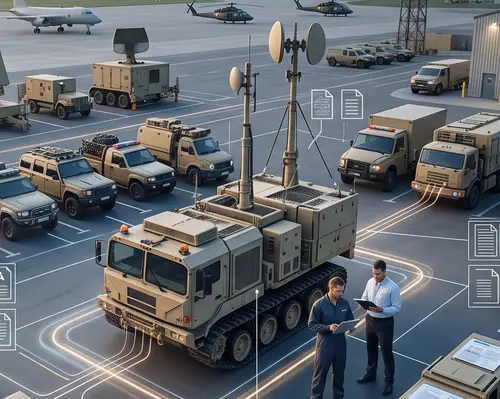
Distributed fleets and technical equipment across remote posts, often with limited connectivity.
- Patrol and support vehicles
- Surveillance and communications
- Generators and power
- Field workshops
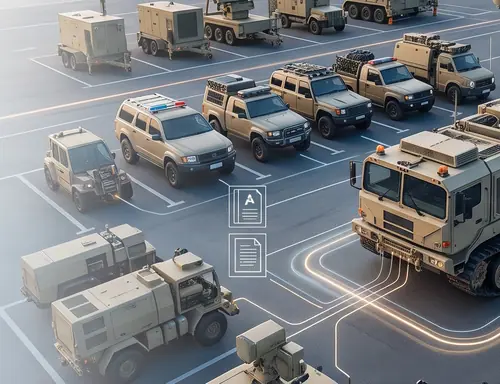
Thousands of distributed vehicles, communications and specialised equipment, managed unit by unit.
- Patrol and specialist vehicles
- Communications and surveillance
- Technical and forensic equipment
- Workshops and generators
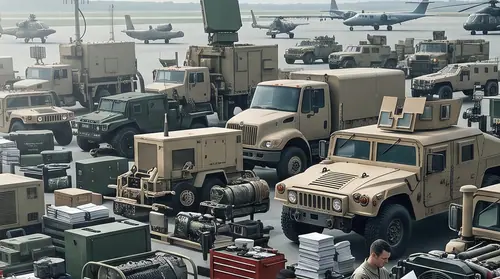
Equipment that must work on the worst day — floods, cyclones, earthquakes and other natural calamities.
- Fire and rescue vehicles
- Boats, pumps and generators
- Heavy and earth-moving equipment
- Field communications and lighting
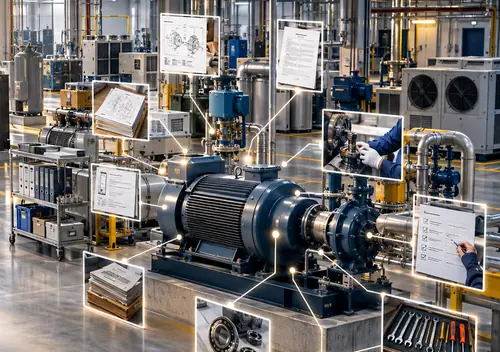
Public-sector fleets, plants and facilities where continuity of service is the mandate.
- Public works and municipal fleets
- State agency equipment
- Public facilities and utilities
- Shared technical workshops
Power, water and transport assets whose failure carries operational and public consequences.
- Power and pumping plant
- Substations and generation
- Transport and rail equipment
- Operational technology
Natural calamities are met with the equipment already in place: boats, pumps, generators, heavy machinery, communications and rescue vehicles that must work on the day. Chaukas is designed to give the teams responsible for that equipment the same context, evidence and history — before the day comes.
Mission-critical operationsBuilt as a system, not assembled from features.
Eight properties that work together — and that a general-purpose assistant or a system of record is not built to provide.
Reasons about one identified asset, not a generic equipment class
Every recommendation cites the evidence behind it
Designed to work without public connectivity at the point of use
Source, revision and authorisation stay attached to knowledge
Memory that outlives personnel rotation
People decide; the decision is recorded and attributed
Configured to the organisation's boundary and policy
Observations and imagery become structured evidence
WeSimplifAI is building the intelligence layer for the physical world.
One asset-intelligence foundation, applied to different criticality domains.
Asset Intelligence for the equipment a business depends on.
VisitAsset Intelligence for the assets of everyday life.
Coming into viewAsset Intelligence for equipment that care depends on.
VisitAsset Intelligence for the assets missions depend on.
You are here